
Summary
You can now choose an R object for a task, inspect its structure, and recognize when combining or converting values changes their type.
What you learned
A data type describes values; an object structure describes how they are organized. Measurement level describes their meaning in your study. For example, a numeric station code can still represent a nominal category.
| Object | Structure | Typical use or caution |
|---|---|---|
| Atomic vector | A sequence of values of one type. | c(1, 2, 3) stores numeric values; combining numbers and text produces character values. |
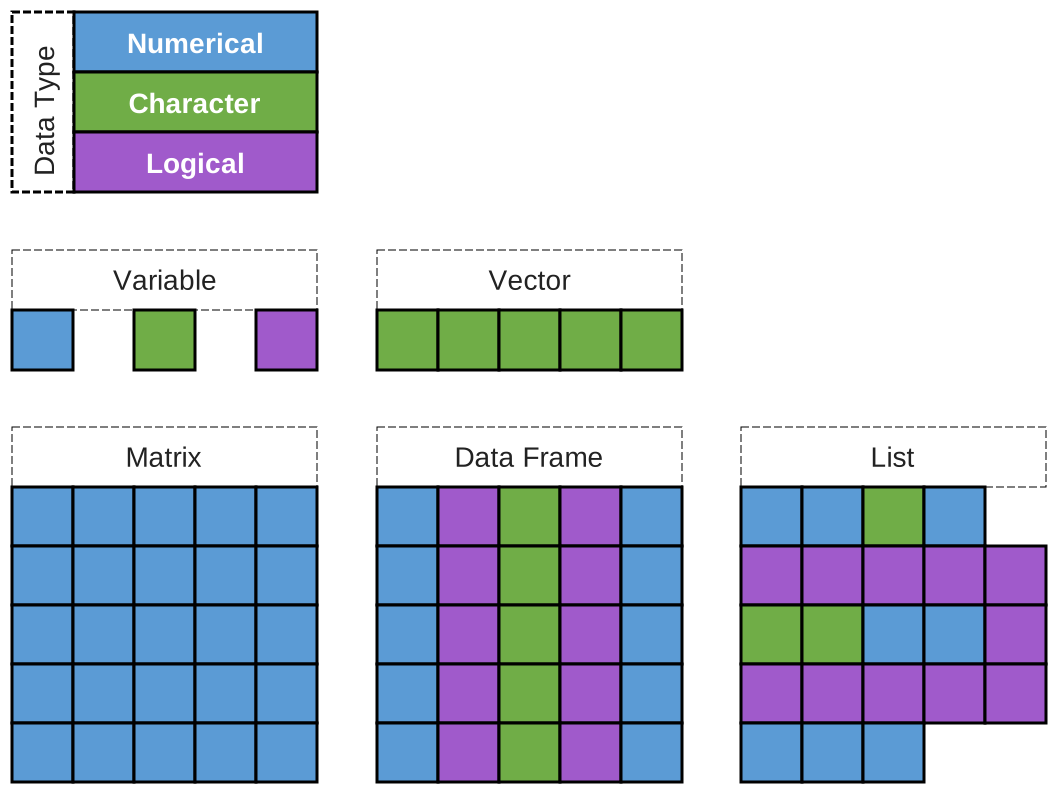
| Matrix | Two dimensions: rows and columns. | A matrix made from an atomic vector has one type throughout. By default, matrix() fills columns first. |
| Array | Dimensions specified by dim, potentially more than two. |
An array made from an atomic vector also has one type throughout. |
| Data frame | A table with equal-length columns. | Ordinary atomic columns each have one type, but different columns may have different types. |
| List | A collection of components. | Components can have different types, structures, and lengths, including other lists. |
| Factor | Categorical values with defined levels. | Internally uses integer codes and level labels; ordered factors additionally record an order. |
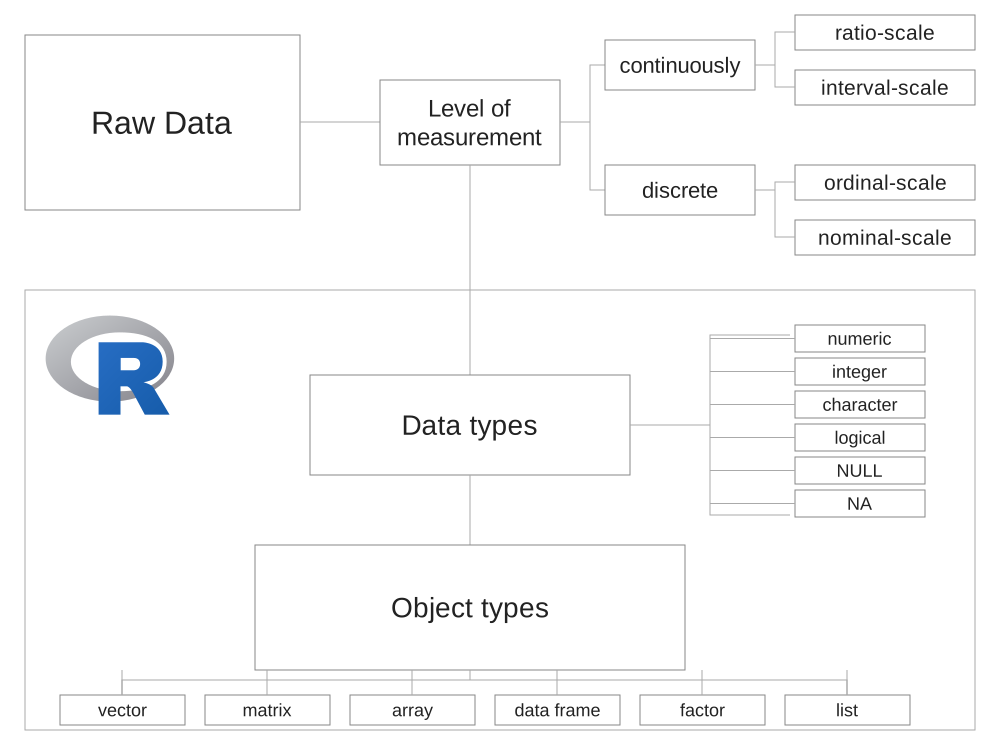
numeric is a class (usually integer or double storage), while NA marks a missing value and NULL is the null object. Use the distinctions and examples above.
str() gives a compact overview. Use class() for an object’s class, typeof() for its internal type, length() for its length, and dim(), nrow(), or ncol() for dimensions where applicable. For a data frame, length() counts columns, not rows.
A short recap in R
observations <- data.frame(
  site = c("A", "B", "C", "D"),
  height_cm = c(12.5, 18, 15, 9),
  habitat = factor(c("forest", "grassland", "forest", "grassland")),
  stringsAsFactors = FALSE
)
str(observations)
dim(observations)
length(observations)
The data frame has four rows and three columns: dim(observations) returns 4 3, while length(observations) returns 3. site is character, height_cm is numeric, and habitat is a factor with two levels.
Before converting
Conversions can change meaning or lose information. Combining numbers and text in an atomic vector converts the numbers to text. Converting a mixed data frame to a matrix can do the same. as.numeric() applied directly to a factor returns its internal codes, not numeric values represented by its labels. Inspect the object and the result before continuing.
Check your understanding
- Which object would hold numeric measurements, site names, and habitat categories in one table?
- Which object would hold that table together with a separate description and a vector of a different length?
- Predict the type of
c(1, "two"). Why is a factor’s integer code different from its category label?
Revisit object types and converting objects if needed.